

Scan. The score does the sorting.
Seven tools answering two distinct questions: what is this product’s overall quality, and how does this meal fit into my day?
Product quality, without ambiguity.
Scan a barcode: ZymFit finds the product (Open Food Facts, 3M+ references, USDA fallback) and calculates an overall nutritional-quality score out of 100. Same product, same score, whatever your goal.
The score is never a black box: nutritional quality, additives and any organic certification are explained clearly. NOVA remains separate processing information.
Nutri-Score, NOVA group and additives appear on every product page. Adjust the quantity in grams or milliliters: calories and macros recalculate live.
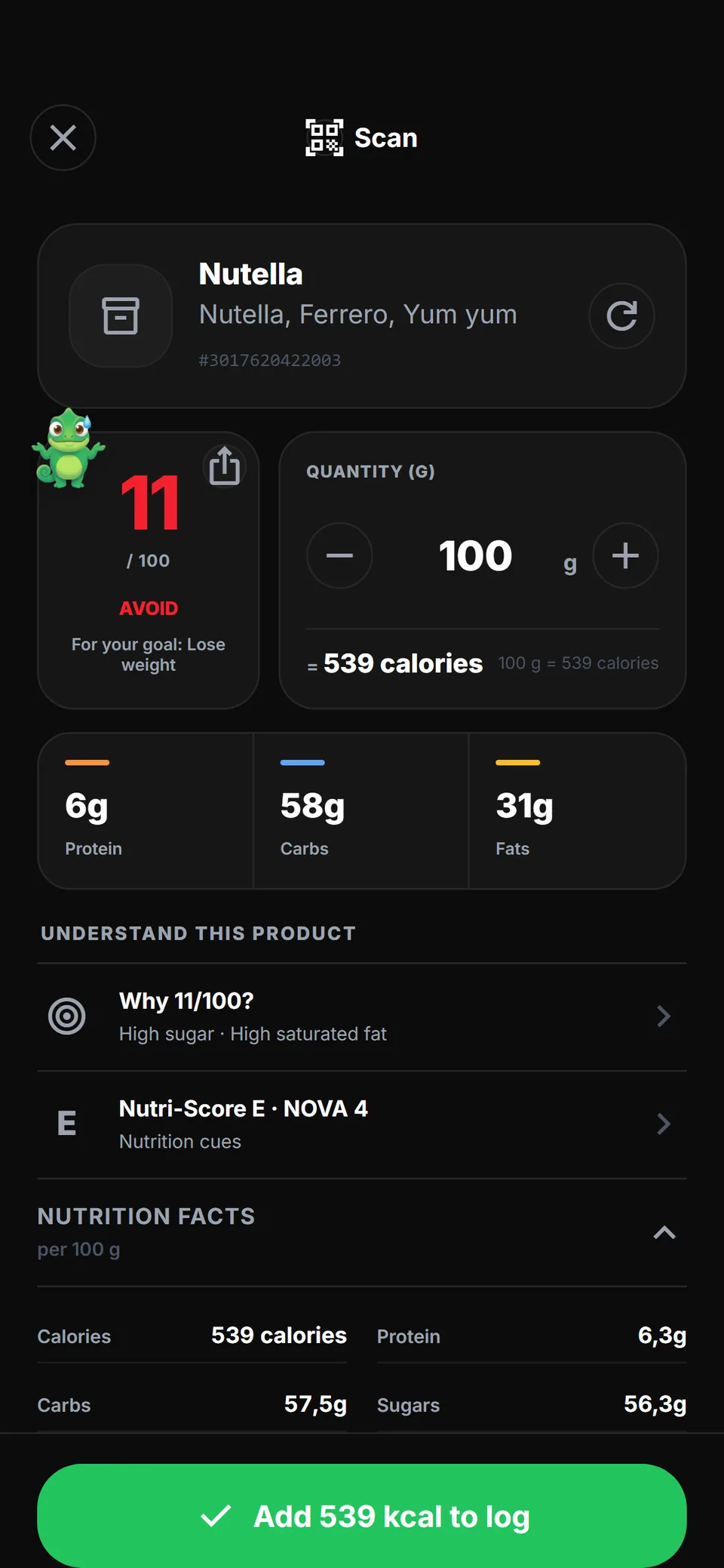

- 01Score /100 and a spelled-out verdict, in under three seconds
- 02Same product, same overall score, whatever your goal
- 037 barcode scans per week with Free · unlimited with Pro
- 04Nutri-Score, NOVA group and full additive list displayed
- 05Adjustable quantity (g/ml), calories and macros recalculated live
- 06Open Food Facts 3M+ products, USDA fallback
- 077 scans/week free, unlimited with Pro
Set your plate down. The AI reads it.
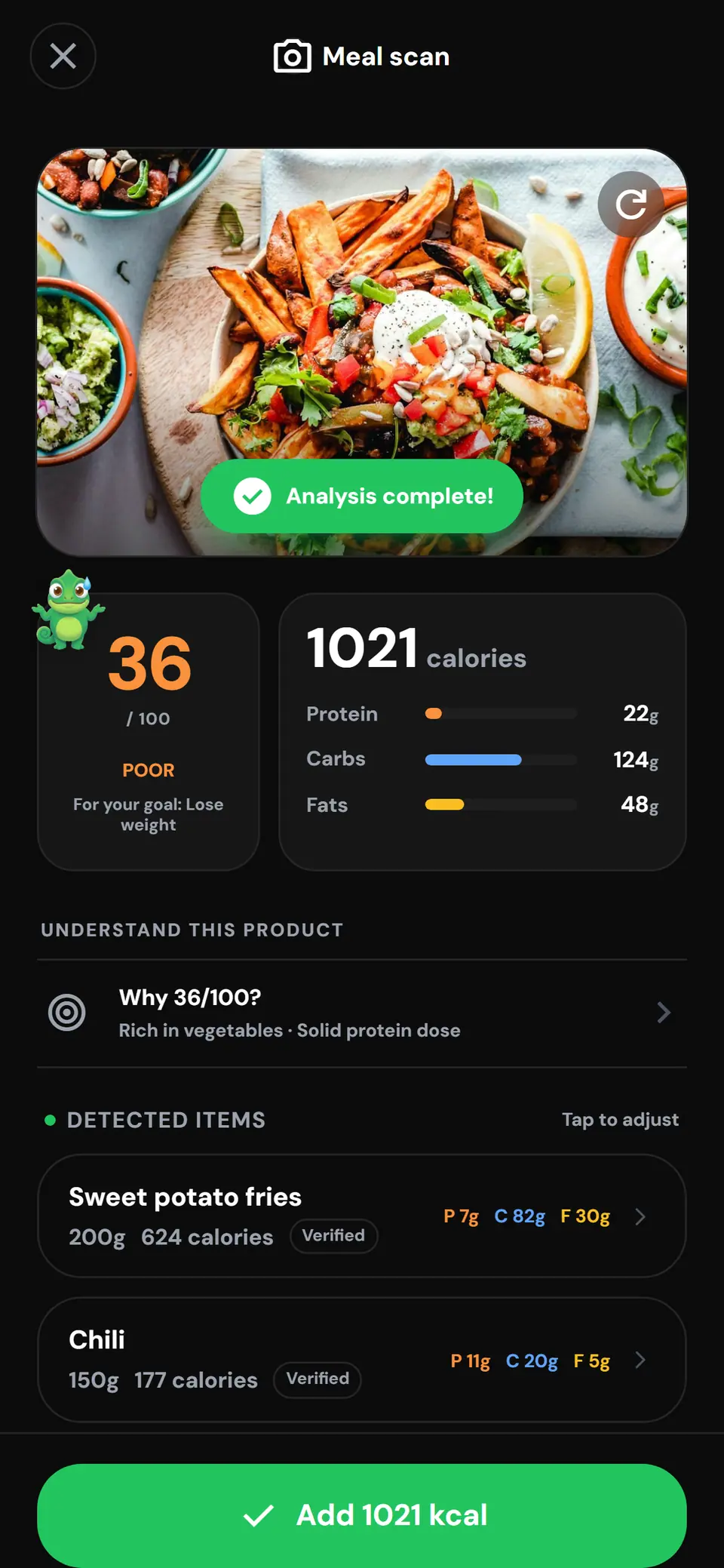
Snap a photo of your dish — or pick one from your gallery. The AI recognizes the foods one by one, with an estimated portion in grams for each.
Unlike the product score, the meal score is contextual: it considers your goal, portion, meal time, and the calories and macros left in your day.
The whole meal gets a day-fit score based on your goal, portion, meal time and remaining calorie/macro budget, with clear reasons.
- 01Foods detected one by one, portions estimated in grams
- 02Every line is adjustable — quantity, delete, add
- 03Total calories and macros recalculated live
- 04Meal score /100 based on portion, meal time and remaining budget
- 05Added to your journal in one tap once confirmed
- 063 photo analyses per week with Free · up to 10 per day with Pro
Your allergens come before the score.
Declare your allergens once (all 14 EU-regulated ones) and your diet — vegetarian, vegan, pescatarian, halal. ZymFit remembers on every scan.
Incompatible product? The alert tops the product page, before the score even appears. An allergen risk is non-negotiable.
Traces (“may contain”) are flagged too — you make the call, with the facts in hand.

- 0114 EU-regulated allergens monitored: gluten, milk, eggs, peanuts, soy…
- 02Diets: vegetarian, vegan, pescatarian + halal cues
- 03Alert shown before the score — impossible to miss
- 04Traces and “may contain” flagged separately
- 05Based on Open Food Facts ingredient lists
Compare in the aisle, not at home.
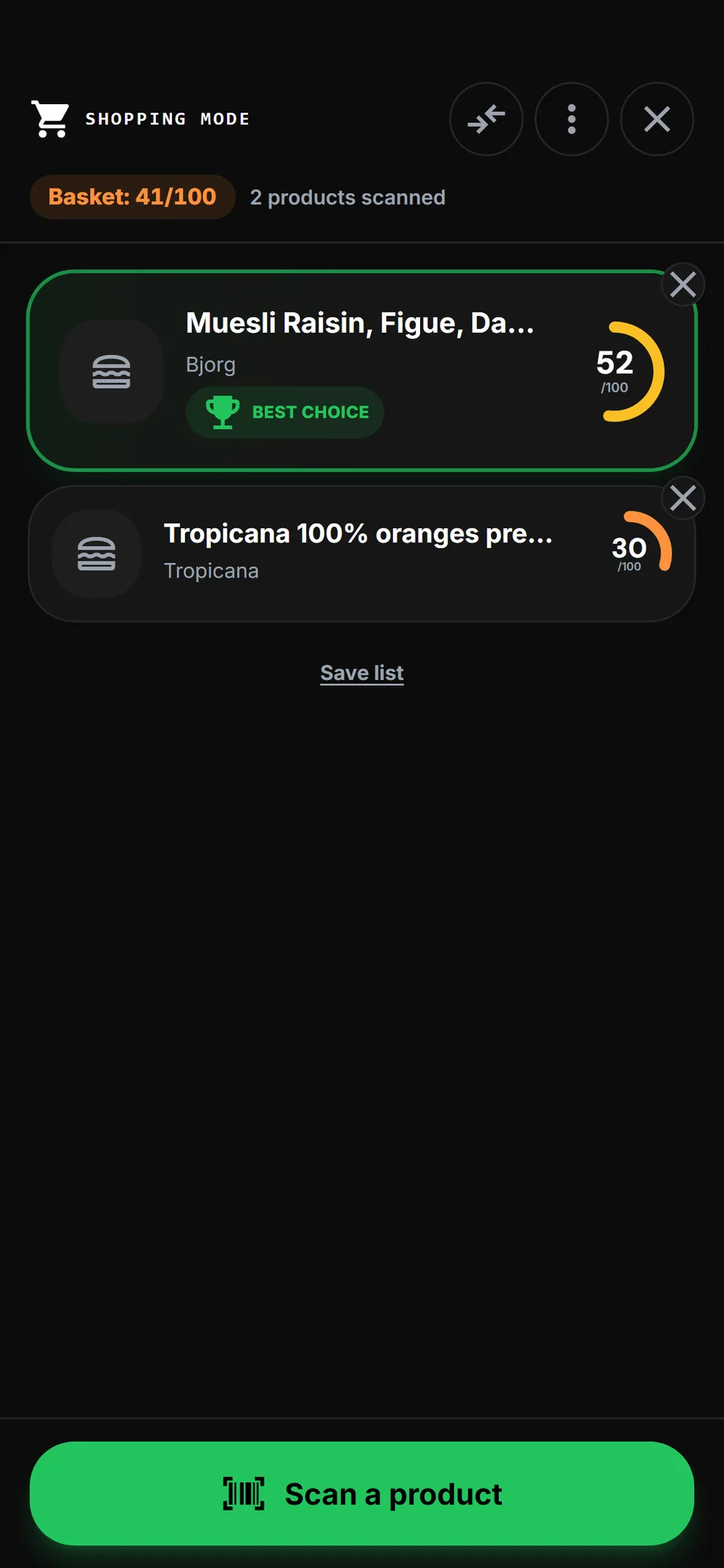
Shopping mode turns the store into a scanning session: every product joins the basket with its score, the best pick is highlighted, and the whole basket gets a score of its own.
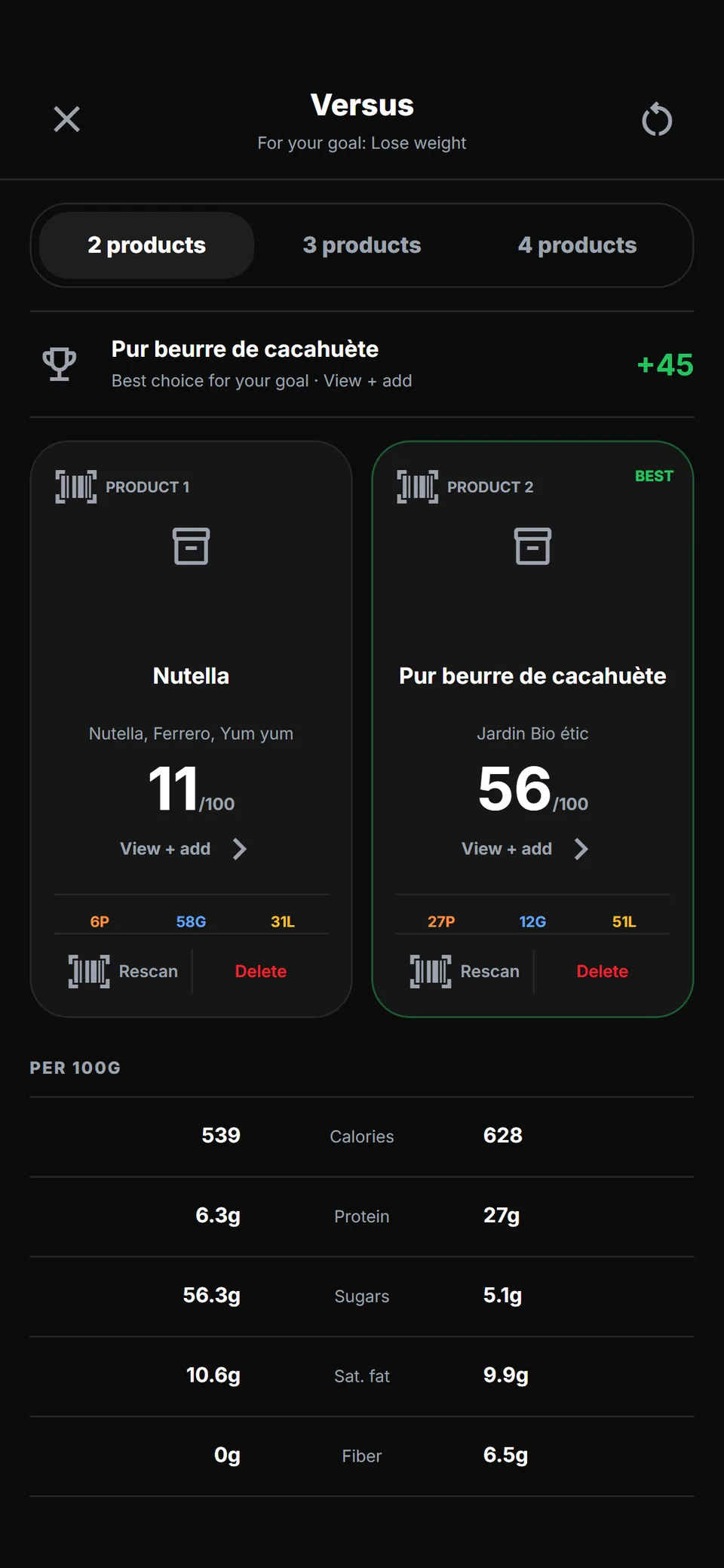
Torn between two options? Versus lines up 2, 3 or 4 products and names the one with the best overall nutritional quality.
Save your list when you're done: the good choices are already made for your next trip.
- 01Scanned products sorted by score, best pick highlighted
- 02Overall basket score, updated with every scan
- 03Versus with 2 to 4 products, winner picked by overall quality
- 04Line-by-line comparison per 100 g: calories, protein, sugars, saturated fat, fiber
- 05Shopping lists named, saved, reusable
Ten seconds per meal. Not ten minutes.
Recents, favorites, saved meals: what you actually eat is always one tap away. Your usual combos replay in a single gesture.
No kitchen scale around? Everyday portions speak your language: “1 egg · 50 g”, “1 glass · 200 ml”, “1 tablespoon”.
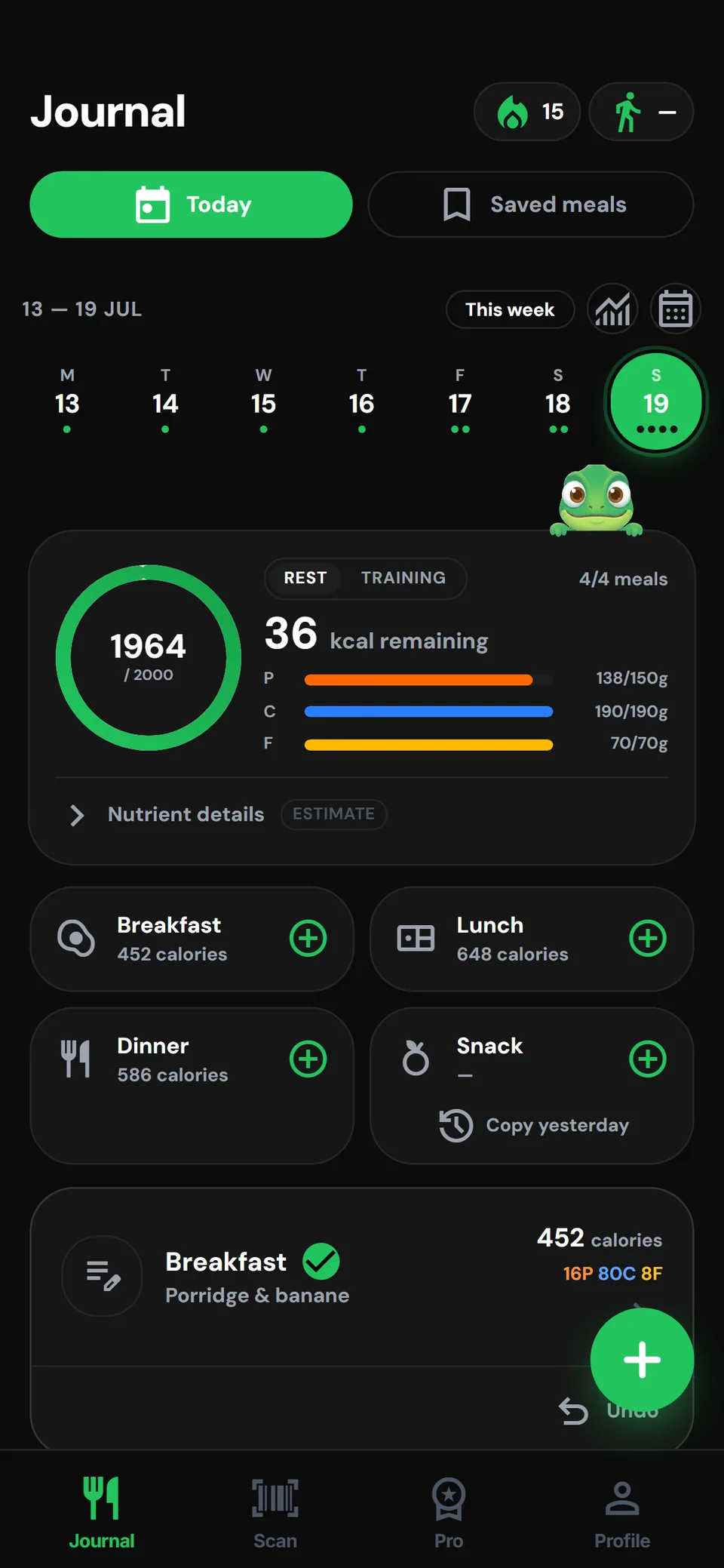
Calories, macros, hydration, meal scores: your whole day fits on one screen — with targets that tell rest days from active days.

- 01Recents and favorites on top of search — re-log in one tap
- 02Saved meals: your go-to dishes added in one go
- 03Everyday portions: “1 egg · 50 g”, “1 glass · 200 ml”…
- 04Calorie and macro targets per day type (rest or active)
- 05Hydration in 250 ml glasses, liquids counted in ml
- 06Unlimited history, free plan included

The flame that keeps you showing up.
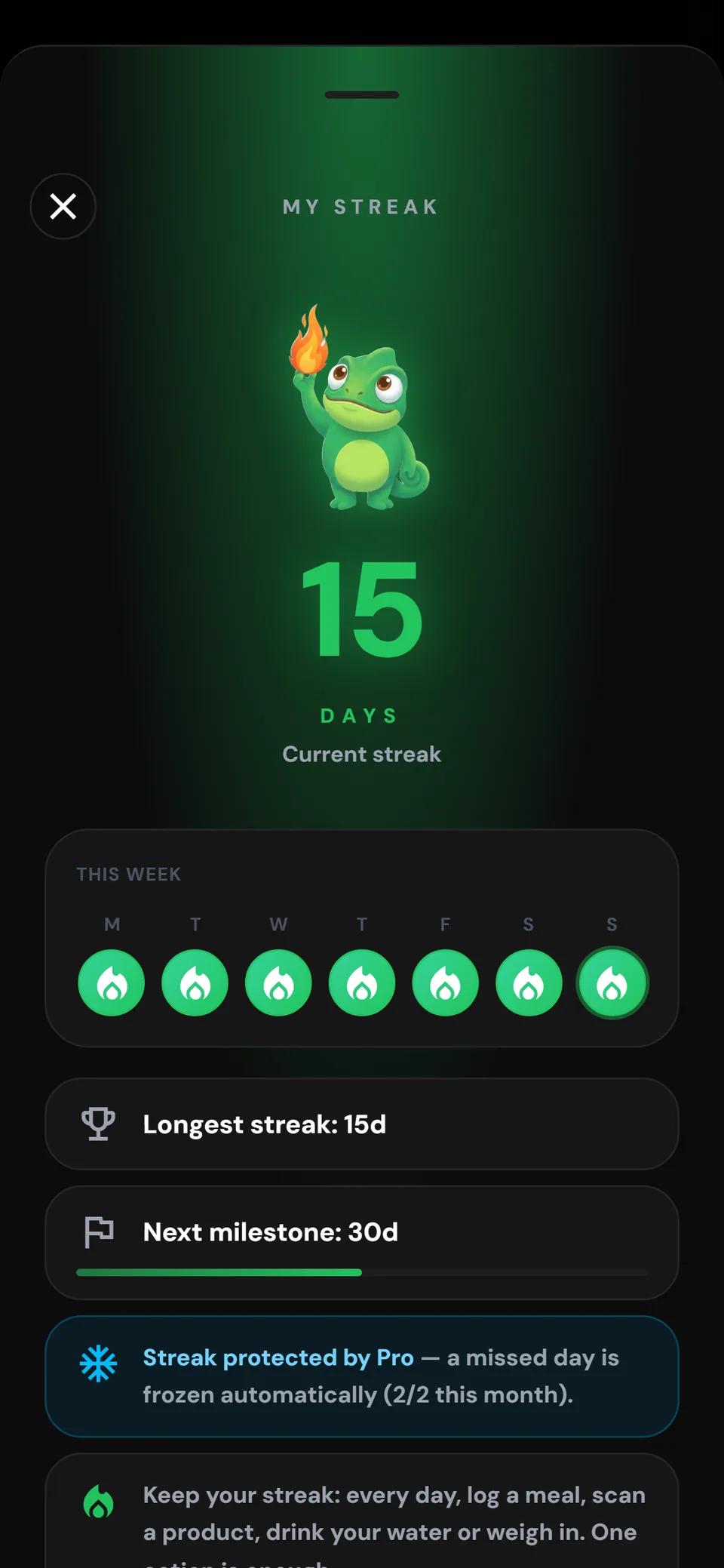
One nutrition action a day — a logged meal, a scan, your water, a weigh-in — and the flame stays lit. Consistency becomes a game, not a chore.
A missed day no longer wipes it all out: with Pro, the freeze automatically protects up to 2 days per month. Your streak survives real life.
Milestones, badges, a weekly calendar, story sharing: your streak gets celebrated — and the app warns you in the evening when it's in danger.
- 01Meal, scan, hydration or weigh-in: one action validates the day
- 02Weekly calendar, longest streak, next milestone
- 03Badges from 3 days to 5 years
- 04Pro freeze: up to 2 missed days protected per month
- 05Evening reminder if your streak is in danger
- 06Share your flame as a story
More capacity, genuinely useful tools.
Free covers everyday use: 7 barcode scans and 3 photo analyses per week, with unlimited journal, saved meals, weight tracking and history.
Pro makes barcode scans unlimited and raises photo analysis to up to 10 per day.
It also adds custom calorie and macro targets, a weekly nutrition coach and automatic streak freezes for real-life interruptions.

- 01Unlimited barcode scans
- 02Up to 10 photo analyses per day
- 03Custom calorie and macro targets
- 04Weekly nutrition coach
- 05Automatic streak freeze: up to 2 missed days protected per month